
[Guest post by Sophie Baxter in Halifax, UK] I love drawing people. Why? Sketching people IS difficult. People move, you get proportions wrong (I do, anyway), likeness goes out of the window. I am not particularly fond of uncomfortable situations, but sketching people and going beyond your comfort zone can be rewarding. Here are a few people-sketching tips for beginners, sketchers or anyone who wants to develop their skills.
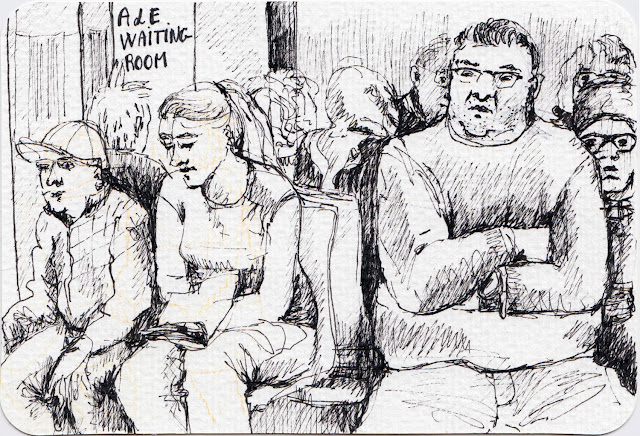
1. Use cheap paper
Use a cheap sketchbook–it will take away the fear of making a mess or spoiling lovely paper while you build your skills and confidence.
2. Take a deep breath and dive in
Sit in a cafe, park or on the train, and draw. If your subject gets up and leaves, just move on to the next one and keep going until you have a page filled with small drawings. Don’t worry about the results. As you practice, your drawings will improve, and you’ll learn which techniques work best for you.
Suggest context with a few lines–people might be the focus of your sketch, but the context will tell the story.

3. Let go of perfection
You are learning–the process matters more than the result. You can’t expect quick drawings to be flawless. They will be lively and have character, though.
I often warm up with a couple of loose contour drawings (when you look at your subject and draw without looking at your paper). The results are loose and wonky–perfect to let go of issues such as likeness!

Drawing is about storytelling and experimenting, a moment in time, emotions, memory and who you are. Like life, sketching is messy and imperfect and all the better for it.

Take time to step back and see your work’s qualities rather than just its flaws. Drawings I was disappointed with when I made them often don’t look half as bad a few days later.
4. Practice in different settings
If you are just starting out and don’t feel comfortable drawing strangers yet, practice drawing friends and family first. Draw your kids or partner while they watch TV. Go out for coffee with a friend and draw them.
Draw people in settings where they are relatively still–on public transport or in a café, for example.
As you build confidence, move to drawing people walking on the street, in shopping centres or playing sports. Try to capture a simple gesture and movement, and build your drawing from there.

5. Vary the focus in your sketches
Are people the main subject of your sketch? Draw detailed faces and suggest the background with a few pen or brush strokes.

If architecture is the focus of your sketch, include quick figures or silhouettes to help give a feel for the place you are drawing.
This will help you develop different ways to draw people to tell specific stories.
6. Try new techniques
Start drawing with a pen or pencil. As you gain confidence, try and experiment with watercolour, pencils or markers to add shading and colour–until you find your favourite tools.
7. Practice, practice and practice
Finally, there’s no magic pill. It takes time to build a skill, and drawing people is no exception. Practice as much as you can, even if it is just a few minutes at a time. Cafes, bars, restaurants, parks and other public spaces, trains, planes and waiting rooms are all great places to draw people. Your skills improve as you fill your sketchbook pages.
Further reading
If you are looking for more tips and inspiration, Lynne Chapman’s Sketching People is one of the best books I have come across on the subject. It contains heaps of useful information and is beautifully illustrated–worth a read if you are looking to improve your people sketches.
Sophie Baxter lives in Halifax (UK). She loves to sketch with whatever she can put her hands on. You can visit her website or follow her on Facebook, Twitter or Instagram.